3D Rainbow Clay Roses Patterns
In the realm of digital design and crafting, visual assets play a pivotal role in bringing creative concepts to life. Among the trending aesthetic styles that have captured the attention of designers, scrapbookers, and DIY enthusiasts is the use of 3D Rainbow Clay Roses Patterns. These intricate designs combine the tactile illusion of handmade clay with the vibrant spectrum of rainbow colors, offering a unique texture and depth that flat illustrations often lack. For individuals seeking high-quality digital papers for their projects, understanding the specifications, applications, and production nuances of these patterns is essential for making an informed purchasing decision.
Understanding the Product Specifications
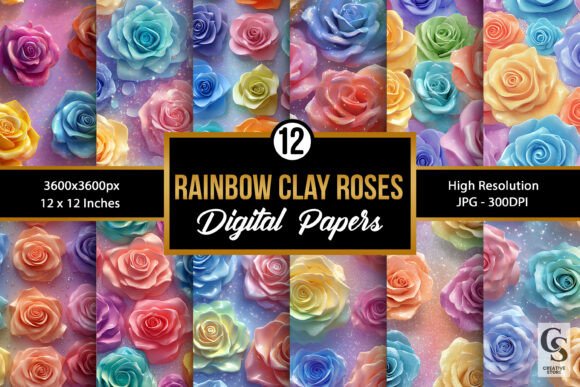
When evaluating digital assets, technical specifications are the first point of comparison. The product in question typically includes a comprehensive zip file containing 12 distinct digital papers. Each file is provided in JPG format at a high resolution of 300dpi. The dimensions are standardized at 3600 x 3600 pixels, which equates to a physical size of 12 inches by 12 inches when printed. This standard size is particularly advantageous as it aligns perfectly with common crafting materials, such as cardstock and scrapbook paper, ensuring minimal waste during the cutting process.
The high resolution of 300dpi is critical for print-on-demand services and home printing. Lower-resolution images often result in pixelation or blurriness when scaled up, detracting from the professional finish of the final product. By providing files at this density, the creator ensures that the fine details of the "clay" texture and the gradient transitions of the rainbow colors remain crisp and clear, regardless of the output medium.
Creative Applications and Use Cases
The versatility of 3D Rainbow Clay Roses Patterns extends across a wide array of creative endeavors. Because the design features a seamless pattern, it can be tiled infinitely without visible breaks, making it ideal for backgrounds and large-scale decorations. Below are several primary use cases where this asset proves valuable:
- Gift Wrapping and Stationery: The vibrant yet elegant nature of rose patterns makes them suitable for wrapping gifts for birthdays, anniversaries, or special occasions. They also serve as excellent bases for custom stationery, including letterheads and envelopes.
- Greeting Cards and Invitations: Designers can utilize these patterns as background layers for wedding invitations, baby shower cards, or holiday greetings. The 3D effect adds a sense of luxury and care to the invitation, elevating the perceived value of the event.
- Digital Planners and Journals: In the growing market of digital planning, users seek visually pleasing backgrounds that do not distract from text. These seamless patterns provide a decorative yet functional backdrop for digital journaling apps like GoodNotes or Notability.
- Physical Craft Projects: For hobbyists, these files are perfect for creating tumbler wraps using heat-transfer vinyl, designing notebook covers, or adding decorative elements to wall art prints. The 12x12 inch size is also compatible with many die-cutting machines and embossing folders.
- Scrapbooking Decorations: Traditional scrapbookers can print these pages on heavy cardstock to create embellishments, pocket pages, or entire album spreads. The seamless nature allows for continuous borders or full-page layouts.
Production Nuances: AI-Assisted Design
A key consideration for modern digital buyers is the method of creation. The designer notes that these designs are generated using AI software and then carefully refined by hand. This hybrid approach has significant implications for the quality and uniqueness of the final product.
AI tools excel at generating complex textures, lighting effects, and color gradients rapidly. They can simulate the look of polymer clay with remarkable accuracy, including the subtle imperfections and highlights that give the material its realistic appearance. However, pure AI generation can sometimes result in repetitive artifacts or illogical structural details. The human refinement stage is crucial here; the designer’s intervention ensures that the roses maintain botanical plausibility, that the color transitions are harmonious, and that any AI-generated glitches are corrected.
For the consumer, this means they are receiving a product that combines the innovative potential of artificial intelligence with the curated taste and precision of human craftsmanship. It is important to view these designs not merely as automated outputs, but as collaborative works where technology serves as a tool for artistic expression.
Evaluating Benefits and Tradeoffs
When deciding whether to incorporate 3D Rainbow Clay Roses Patterns into your workflow, it is helpful to weigh the benefits against potential limitations.
Benefits
The primary advantage is the aesthetic impact. The 3D effect creates visual interest that draws the eye, making designs stand out in a crowded market. Additionally, the rainbow color palette appeals to a broad audience, offering inclusivity and joyfulness. The digital format provides immediate access, allowing for rapid prototyping and iteration without the cost of physical samples. Furthermore, the inclusion of 12 variations within a single package offers variety, enabling users to mix and match themes for cohesive project sets.
Considerations and Tradeoffs
While the digital convenience is a benefit, it requires a certain level of technical proficiency. Users must be comfortable handling digital files, managing resolutions, and preparing print-ready documents. There is also the consideration of originality; as AI-assisted design becomes more prevalent, some clients may prefer entirely hand-drawn or traditionally created assets. However, the human refinement step mitigates this concern by adding a layer of unique curation.
Another factor is the specific style preference. The "clay" aesthetic is trendy but may not suit all brand identities. Brands aiming for a minimalist, corporate, or vintage aesthetic might find the vibrant, textured roses too busy or informal. It is essential to assess whether this specific visual language aligns with the intended message of the project.
Decision-Making Insights
To determine if 3D Rainbow Clay Roses Patterns are the right fit, consider the following questions:
- What is the end goal? If you are producing high-volume, colorful, and emotionally engaging items like party supplies or children’s products, these patterns are a strong fit. For somber or strictly professional contexts, alternative palettes might be more appropriate.
- Do you need seamless tiling? Verify that the specific pattern you select is truly seamless if you plan to use it for large backgrounds or wrapping. Most commercial digital papers are designed with this in mind, but checking sample tiles is a prudent step.
- Is print quality a priority? Ensure your printing equipment supports 300dpi output. If you are primarily designing for low-resolution web use only, the high-resolution aspect is less critical, though it still future-proofs your assets.
Ultimately, the value of 3D Rainbow Clay Roses Patterns lies in their ability to add a touch of whimsical elegance to digital and physical creations. By leveraging high-resolution files that blend AI efficiency with human artistic refinement, creators can produce work that feels both modern and meticulously crafted. Whether used for personal journals or commercial greeting cards, these assets offer a versatile foundation for expanding one’s creative repertoire.