Cute Bow Seashell Patterns: A Guide to High-Quality Digital Assets for Creators
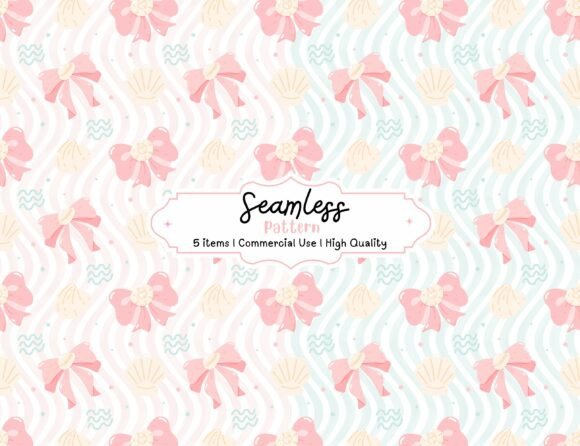
In the world of digital design, particularly within the realms of sublimation, print-on-demand, and crafting, visual appeal is paramount. Among the trending aesthetic choices that capture attention is the Cute Bow Seashell Pattern. This specific design theme blends the playful, feminine charm of bows with the organic, textured allure of seashells, creating a versatile backdrop suitable for everything from summer-themed apparel to delicate stationery.
However, not all digital assets are created equal. Many creators, especially those new to the industry, often overlook critical technical specifications when selecting patterns. This oversight can lead to blurry prints, wasted materials, and frustrated customers. Understanding the nuances of resolution, file formats, and seamless tiling is essential for ensuring your final product looks as good in reality as it does on your screen. This guide explores what to look for in high-quality pattern designs, using the detailed specifications of premium assets like those from Salty Arts Design as a benchmark for excellence.
Why High Resolution Matters More Than You Think
One of the most common mistakes beginners make is downloading low-resolution images and assuming they will scale up without issue. When you select a pattern for physical production—whether it’s for fabric printing, tumblers, or large-scale wallpaper—the clarity of the image is non-negotiable. A standard web image might be 72 DPI (dots per inch), which looks fine on a monitor but results in pixelated, muddy prints when scaled up.
To avoid this, you must prioritize assets that offer 300 DPI resolution. For instance, a premium Cute Bow Seashell Pattern should come in a substantial file size, such as 9375 × 9375 pixels. This dimension allows for a massive print area—approximately 31.25 × 31.25 inches at 300 DPI—without any loss of quality. This level of detail ensures that individual elements, like the intricate ridges of a shell or the soft folds of a bow, remain crisp even when viewed up close.
If you are designing for small items like phone cases or stickers, a lower resolution might seem acceptable. However, because these items are held close to the user, any blurriness is immediately noticeable. Investing in high-resolution files upfront saves you from rework and maintains your professional reputation. Always check the pixel dimensions before purchasing or downloading; if the file is smaller than 3000 pixels on the shortest side, it is likely insufficient for professional-grade output.
Understanding File Formats: JPEG vs. PNG
Another frequent point of confusion involves file formats. While many users assume one format fits all needs, the choice between JPEG and PNG significantly impacts your workflow, especially when dealing with backgrounds and transparency.
- JPEG Files: These are ideal for solid background applications. A package offering multiple color variations, such as two distinct colored backgrounds and one white background, provides flexibility for different branding needs. JPEGs are compressed and efficient, making them perfect for full-coverage designs where you want the pattern to fill the entire space uniformly.
- PNG Files: The true power of PNG lies in its support for transparency. If you plan to use the Cute Bow Seashell Pattern as an overlay, a sticker element, or a design component that needs to sit atop another image, a transparent background is crucial. Without transparency, you are stuck with a rectangular block of white or colored background that can ruin the aesthetic of layered designs.
When evaluating a pattern pack, ensure it includes both formats. Relying solely on JPEGs limits your ability to create complex, layered compositions. Conversely, using PNGs for full-page fabric prints can sometimes result in larger file sizes without added benefit if transparency isn’t required. A comprehensive asset pack typically provides 2 transparent background PNGs alongside several JPEG options, giving you the best of both worlds.
The Importance of Seamless Tiling
For applications like fabric printing, wrapping tumblers, or creating continuous wallpaper, the pattern must be "seamless." This means the edges of the image align perfectly so that when tiled, no visible lines or breaks appear. A poorly constructed pattern will show obvious grid lines or mismatched elements, ruining the illusion of a continuous surface.
A high-quality Cute Bow Seashell Pattern is engineered to tile effortlessly. This feature is vital for efficiency. Instead of manually positioning each shell and bow to avoid gaps, you can repeat the pattern across your canvas, and it will blend naturally. This not only speeds up your design process but also ensures consistency across large projects. Before applying a pattern to a mockup, always test-tile it in your design software. Zoom out and look for repeating artifacts or misalignments at the seams.
Common Misapplications and How to Avoid Them
Even with the best assets, creative misuse can lead to poor results. Here are a few areas where creators often stumble:
Ignoring Aspect Ratios
Designers frequently try to force a square pattern onto a rectangular object, such as a standard notebook or a tall tumbler. While the pattern itself may be high quality, stretching it disproportionately can distort the shells and bows, making them look unnatural. Instead of stretching, consider cropping the pattern to fit the aspect ratio of your product. Because high-res files like the 9375px option allow for significant cropping without quality loss, you have the freedom to frame the design exactly how you need it.
Overlooking Color Profiles
Colors on a screen (RGB) do not always translate accurately to print (CMYK). While most digital downloads are provided in RGB, professional printers may require CMYK conversion. If you are sending files to a commercial printer, ask about their preferred color profile. For home printing or direct-to-garment services, RGB is usually fine, but be aware that bright neons might appear slightly duller in print. Testing a small sample print is always recommended.
Neglecting Licensing Terms
Perhaps the most critical oversight is ignoring the usage rights. Some digital patterns are intended for personal use only, meaning you cannot sell products made with them. Others may allow commercial use but prohibit reselling the digital file itself. Always read the license agreement. Reputable designers, such as those behind Salty Arts Design, clearly outline these terms. Assuming a download is free for unlimited commercial use can lead to legal issues and account bans on platforms like Etsy or Shopify.
Evaluating Quality: What to Look For
When browsing for patterns, don’t just rely on the thumbnail. Look for detailed previews that show zoomed-in sections of the design. In a Cute Bow Seashell Pattern, you should be able to see texture in the shells and subtle shading in the ribbons. If the preview looks flat or muddy, the underlying file likely lacks detail.
Additionally, check the variety offered. A single static image is less useful than a coordinated set. A premium package might include multiple background colors (e.g., pastel blues, sandy beiges, crisp whites) and both opaque and transparent versions. This variety allows you to create cohesive collections for different seasons or themes. For example, a white background might work well for spring stationery, while a darker blue could suit summer drinkware.
Final Thoughts on Creative Execution
The success of your project depends less on the trendiness of the Cute Bow Seashell Pattern and more on the technical execution. By prioritizing high resolution (300 DPI), utilizing appropriate file formats (PNG for transparency, JPEG for solids), and ensuring seamless tiling, you set yourself up for professional results. Avoid the pitfalls of low-quality assets and improper scaling by doing your due diligence before starting your design.
Whether you are a small business owner looking to launch a new line of accessories, a DIY enthusiast crafting personalized gifts, or a digital designer building a portfolio, choosing the right assets makes a tangible difference. Resources like those from Salty Arts Design provide the necessary tools—high-res, versatile, and ready for use—to help you bring your creative vision to life. Stay salty and sweet, and let your creativity flow with confidence.