Evaluating Neutral Painted Brushstrokes Patterns for Modern Creative Projects
In the realm of digital design and craft, texture plays a pivotal role in establishing mood and visual interest. Among the various aesthetic trends gaining traction, Neutral Painted Brushstrokes Patterns have emerged as a versatile choice for designers, scrapbookers, and DIY enthusiasts seeking sophistication without visual clutter. This style is characterized by its muted color palette—typically comprising whites, creams, taupes, grays, and soft earth tones—and its organic, hand-painted appearance that mimics traditional media while leveraging the precision of digital tools.
Understanding the specific attributes of these patterns, particularly when sourced as high-resolution digital assets, allows creators to make informed decisions about their application. The following analysis explores what makes this pattern distinct, how it compares to other textural styles, and the practical considerations involved in integrating it into professional or personal projects.
Defining the Aesthetic: What Makes It Distinct?
The core appeal of Neutral Painted Brushstrokes Patterns lies in the tension between order and chaos. Unlike geometric or perfectly symmetrical designs, brushstroke patterns introduce irregularity. They simulate the movement of a physical brush on canvas, creating subtle variations in opacity, thickness, and direction. This organic quality adds depth to flat digital compositions, preventing them from appearing sterile or overly manufactured.
Furthermore, the "neutral" aspect is not merely a color choice but a strategic design decision. Neutrals serve as a backdrop rather than a focal point. They allow other elements—such as typography, photographs, or vibrant accent colors—to stand out without competition. This makes the pattern an ideal foundational layer for complex layouts where readability and hierarchy are paramount.
Modern iterations of this style often incorporate artificial intelligence to generate base textures, which are then refined by human artists. This hybrid approach ensures that the brushstrokes feel authentic and varied, avoiding the repetitive tiling issues common in lower-quality stock images. The result is a collection of digital papers that offer both consistency in theme and uniqueness in detail.
Technical Specifications and Usability
When evaluating digital paper packs, technical specifications are just as important as aesthetic appeal. High-resolution assets are non-negotiable for professional results. A standard requirement for print-ready materials is a resolution of 300 dots per inch (dpi). At this density, details remain crisp even when scaled down or viewed up close.
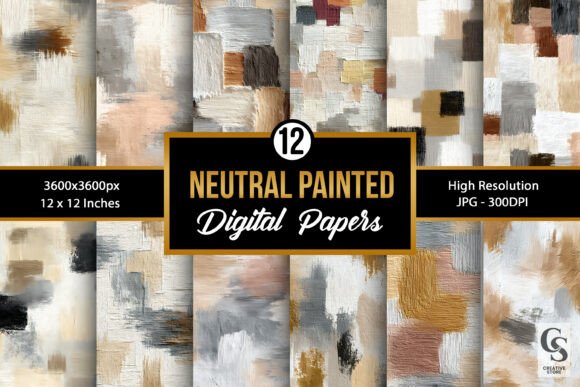
For instance, a set of Neutral Painted Brushstrokes Patterns provided in JPG format at 3600 x 3600 pixels equates to a physical size of 12 inches by 12 inches at 300 dpi. This dimension is the industry standard for scrapbooking and card making, ensuring compatibility with most cutting machines and printing services. Users should verify these metrics before purchase, as lower resolutions can lead to pixelation, especially when used for larger formats like wall art or banners.
- Resolution: Ensure files are 300 dpi for sharp print output.
- Dimensions: Standard 12x12 inch squares offer maximum versatility.
- Format: JPG files are widely compatible, though some workflows may benefit from PNGs if transparency is required.
The inclusion of multiple variations within a single zip file—often twelve or more distinct designs—provides sufficient variety to maintain visual interest across a project. Whether designing a series of invitations or a multi-page journal, having access to subtle shifts in stroke direction and tone prevents monotony.
Comparing Styles: Brushstrokes vs. Alternatives
While Neutral Painted Brushstrokes Patterns are highly adaptable, they exist within a broader ecosystem of textured digital backgrounds. Comparing them to alternatives helps clarify their best-fit use cases.
Brushstrokes vs. Geometric Patterns
Geometric patterns offer structure, rhythm, and modernity. They are excellent for tech-focused themes, minimalist branding, or corporate stationery. However, they can feel rigid or cold if overused. In contrast, painted brushstrokes introduce warmth and humanity. If a project requires a sense of approachability, creativity, or artistic flair, brushstrokes are the superior choice. For data-heavy presentations or strict brand guidelines requiring symmetry, geometry remains the better option.
Brushstrokes vs. Marble or Stone Textures
Marble and stone textures convey luxury, permanence, and elegance. They are frequently used in wedding stationery and high-end packaging. While marble is sophisticated, it can sometimes appear heavy or dated depending on the color saturation. Neutral brushstrokes offer a lighter, airier alternative. They provide similar elegance but with a contemporary, sketch-like edge that feels more current and less formal. This makes them particularly suitable for lifestyle blogs, modern planners, and casual greeting cards.
Brushstrokes vs. Solid Colors
Solid colors are the simplest background option, offering zero distraction. However, large areas of solid color can feel flat and unengaging. Adding a subtle brushstroke texture introduces visual weight and complexity without adding noise. It breaks up the negative space effectively. The tradeoff is that textured backgrounds require careful attention to foreground contrast; text placed over busy brushstrokes may become illegible if not properly spaced or shadowed.
Practical Applications and Use Cases
The versatility of Neutral Painted Brushstrokes Patterns stems from their ability to bridge the gap between digital and analog aesthetics. Below are specific scenarios where this pattern excels.
Stationery and Greeting Cards
In the realm of personalized stationery, these patterns add a bespoke touch. They work exceptionally well for birthday cards, thank-you notes, and holiday greetings. The neutral tones ensure that the message remains the focal point, while the texture adds a tactile quality that translates visually. When printed on matte or textured paper stock, the digital brushstrokes can mimic the look of actual watercolor or acrylic paint, enhancing the perceived value of the card.
Digital Planners and Journals
For digital planning communities, such as those using GoodNotes or Notability, clean and calming backgrounds are preferred. Busy or dark patterns can cause eye strain during long planning sessions. Neutral brushstrokes provide a soothing visual environment that encourages focus. Their subtle nature means they do not compete with handwritten notes or digital stickers, making them a staple in many planner templates.
Scrapbooking and Digital Collages
Scrapbookers often struggle with finding backgrounds that complement photos without overpowering them. These patterns act as a perfect canvas for family photos, travel memories, and event highlights. The organic lines of the brushstrokes can guide the viewer’s eye across the page, creating a natural flow. Additionally, because the colors are neutral, they pair easily with any photo palette, reducing the need for extensive color correction.
DIY Crafts and Physical Products
The applications extend beyond paper-based crafts. With high-resolution files, users can create custom tumbler wraps, notebook covers, and even wallpaper. The 12x12 inch format allows for easy tiling or cropping to fit various product dimensions. For example, wrapping a metal tumbler requires seamless edges; selecting a pattern with continuous stroke flows ensures that the design looks cohesive when wrapped around cylindrical surfaces.
Evaluation: Strengths and Limitations
Before incorporating Neutral Painted Brushstrokes Patterns into a workflow, it is essential to weigh their strengths against potential limitations.
Strengths
- Versatility: Suitable for both digital and print media.
- Aesthetic Flexibility: Complements a wide range of fonts, photos, and accent colors.
- Perceived Value: Adds a handcrafted, artisanal feel to mass-produced items.
- Professional Polish: High-resolution AI-refined assets ensure clean, sharp outputs.
LIMITATIONS
- Contrast Sensitivity: Requires careful placement of text and bright elements to maintain readability.
- Style Specificity: May not align with ultra-modern, futuristic, or highly graphic design styles that demand sharp lines and bold contrasts.
- Repetition Awareness: While high-quality sets minimize this, users must still check for repeating tile artifacts when scaling patterns beyond their native size.
Decision Factors: Is This the Right Choice?
Choosing the right background pattern depends on the specific goals of the project. If the objective is to create a calm, elegant, and inviting atmosphere, Neutral Painted Brushstrokes Patterns are likely an excellent fit. They are particularly recommended for creative professionals who want to showcase their work without distracting from the content.
However, if the project demands high-energy visuals, strong branding through bold graphics, or strict adherence to a minimalist grid system, other options might be more appropriate. Additionally, consider the end-use. For small-scale items like business cards, the texture may be too subtle to notice. For larger formats like posters or web headers, the nuance of the brushstrokes will be fully appreciated.
Ultimately, the refinement process behind these digital papers—where AI generation meets human artistic oversight—ensures a level of quality that distinguishes them from generic clipart. By understanding the balance between texture and simplicity, creators can leverage these patterns to enhance their projects with professionalism and style.